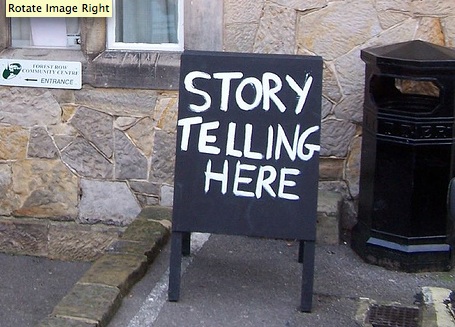
A tale of a tale of a shareable future, part 1: Introduction
Benjamin Rosenbaum
05.21.10, 11:24pm Comments (8)

So about a month ago one Jeremy Adam Smith(1), editor of shareable.net, sent me a solicitation:

"I'm inviting science fiction authors to write stories of shareable futures, where technology has changed the rules of ownership and access, and people share transportation, living spaces, lives, dreams, everything and anything....As I told Cory and Bruce, I'm not looking for utopian propaganda--and indeed, I'd describe the stories they sent as counter-utopian. I'm looking for character and place, troubles and ambiguities, strong stories and intelligent speculation. Sharing solves problems--but what new problems could it create? What conflicts might it provoke?"

Now, here's something about living in a monetary exchange economy:

When I get such "would you write us a story?" emails, one of the first thing I scan for is pay rates. This is not because the money itself matters much. Given my sluggish productivity, my lucrative day job, and rates for short fiction nowadays(2), the check is not likely to have much impact on my finances. But for venues I haven't yet heard of, cents-per-word is usually a reasonable rough proxy for how interesting they're likely to be -- in terms of professionalism, prestige, audience, and presentation.

So what are money and exchange for? Well: by brutally simplifying and quantifying the complex and polyvalent, by imposing costs and forcing decisions, they make a large world with poor information transparency easier to navigate. Indeed you could almost say the entire world we live in, and all our human relations, are distorted by a system principally evolved to allow distant strangers to deal with each other.

As a science fiction writer I naturally think: could another system for allowing distant strangers to deal with each other displace it?

Jeremy was paying Clarkesworld rates, close to the top of the short speculative fiction market, which (along with his name-dropping of other authors I admire) enticed me to click through. And Shareable is interesting: sort of like what a glossy lifestyle magazine would look like if it were designed to encourage people to discard and scavenge things rather than buy them, to share rather than consume. (It is so slick-looking I thought it was a commercial operation, which I thought was a piquant irony; acutally it's a nonprofit, so that the irony is located in my misapprehension).

The solicitation also came at a time when I have been thinking a lot about speculative economics, about the degree of arbitrariness and contingency of economic systems(3), and the way our lives are molded by them:

  • The novel I'm currently supposed to be writing(4) is mostly set in a moneyless, panoptic global monoculture, a "pride economy" in which everyone's emotional state is subject to observation, bookkeeping, debate, and sometimes betting, in which sibling rivalry provides the conceptual template for all transactions, and in which there's only one monolithic medium for everything from how you obtain food and clothing, how you're getting along with your friend, and how much you trust a piece of information you read... and it's all falling apart.
  • I've been reading nonfiction about historical economy -- Before European Hegemony offers a fascinating survey of the 13th century's globalization boom, in which power was distributed roughly evenly among many competing economic regions -- until it fell apart under the stresses of the bubonic plague and the collapse of the Pax Mongolica, setting the stage for China's dramatic withdrawl and upstart Europe's domination from the 16th century on. In telling this story Abu-Lughod makes a compelling case for the contingency of economic history -- it didn't have to be the way it turned out, with one unlikely corner of Eurasia exterting hegemonic power over the rest of the world.
  • I'll be on a panel on Economics of the Future at Wiscon next weekend.
  • I've been talking to the kids a lot about money, work, and so on, and their insightful questions make me realize how odd and sort of suspicious the system in which we are embedded in. It is interesting how excited they are about people who intentionally live without money, scavenging the excess of our overstuffed drive to accumulate surplus; surely there's a clue there -- in their reaction --about what money means to us, and does to us, psychologically.

So... as I think you may have guessed by now. I said yes. Specifically, said he could reprint "Falling" (a short about an adhocratic Frankfurt of the 2050s which appeared in Nature, and which Nature kindly and experimentally-for-them allowed me to put under Creative Commons By-NC-SA) and that I'd try to write a sequel to "Falling" for him on his rather tight deadline.

This may be tempting fate. I almost never write sequels -- or even set-in-the-same-universes. The only real follow-on that comes to mind that I've attempted is that very same languishing novel (it's a companion piece to my story "Droplet").

To make the time-crunch involved more dramatic (as if I weren't already away this weekend, travelling transatlantically to Wiscon right after that, wrapping up a product release at the day job, and then flying to the USA where I will be single-parenting kids on vacation, and as if I didn't already owe Tim and Ethan stories and Sharyn a picture book script), we decided that I'd do an experiment in public composition by blogging (more or less extensively) about my attempt to write the short story in question.

And that, dear unsuspecting readers, is what you are in for now. In part 2, hopefully soon, a little more about my muddled ambivalence about capitalism, and how I got nagged (not by Jeremy!) into cramming this blogging-series experiment into the already ambitious short story timeframe.


[Crossposted at benjaminrosenbaum.com]

Footnotes

  1. It wasn't until composing this blog entry that I realized the irony implicit in writing a postcapitalist heterotopia for someone with that name; if he were a fictional character, my critiquers would make me take out the cute in-joke.
  2. You can live from short fiction in 2010, if you are also on the state roadkill registry and fish really well
  3. Such systems are not wholly arbitrary, of course; it's like with biological evolution. Given a certain technological and environmental framework and set of initial conditions, systems may be strongly driven to certain states. But on the other hand, like with biology, the full range of what's in principle possible is immense -- and small changes can develop into large ones.
  4. What's going on with my novel? Why thank you for asking! I was trucking ahead at 200 words a day until last October, when I passed 100,000 words total, and hit a wall; I had no idea what was supposed to happen next, I had created all this clever plotty foreshadowing and conundrums for the characters to resolve and building tensions, but I had no idea what I was leading to. I was just trusting myself to pull a rabbit out of the hat at the right time. Reached in: no rabbit. And I think it's not entirely unrelated to the topic of this post: I had unleashed a revolution (or uprising?) in an ambiguous heterotopia, and I had no idea how to follow it up. Since then I've been trying to overhaul it in synopsis form, and also working on a few other things. It's such a relief to have short stories at various stages in the pipeline again, I can't tell you.
Your rating: None Average: 5 (2 votes)

Comments

This piece is actually sort of hilarious, Ben; I like how you somehow manage to talk about the economics of short story writing, the whuffies and comparative rates of short fiction markets, the nature of money and exchange, the astoundingly good quality of Shareable.net, your novel (thanks for the update), Wiscon, European Hegemony, your kids, ambiguous heterotopias, the ironies of my name (I use my full name for the sake of SEO, in case you're wondering), and so much more -- all in a few hundred words. So you're writing in public about the process of writing your story for us, I am free to editorially nag you in public about making your deadline?

Jeremy Adam Smith
Editor, Shareable.net

And you're the first Shareable author to offer footnotes!

I'm the father of a five-year-old and a one-year-old, and I'd love to hear more about how you're discussing issues of economics, money, work, consumption and value with your children in ways that encourage them to question the status quo assumptions of the conspicuous-consumption-based culture that surrounds them. I try to have conversations with my five-year-old about these kinds of things--why her parents have to work, how and why we get the things in our home or the food on our table, why we don't buy everything she wants just because she wants them. But I'm not always sure my message is getting through, especially when she receives different messages from her friends at school. She's just finishing kindergarten, and though we limit her exposure to commercial content on television and the internet, her school culture more than makes up for it. Just yesterday she told me about a friend coming to school with yet another new character backpack, and when I chaperoned a park field trip, the free-and-reduced-lunch students' cafeteria-packed sack lunches were full of branded food-like substances, down to the "sandwich" (a Smuckers Uncrustable). I want to encourage the kind of questioning your children, Ben, seem to be doing on their own, without being too didactic.

Very interesting start, and it makes me nearly insanely curious as to where this is going to go next. Will the next entry be meta? Or story? The entire idea of a non-profit soliciting authors with a not insignificant per word payment to write about sharing and a non-monetary society is, well, pretty close to crazy enough to just maybe work.

Why, of course you can nag me in public, Jeremy! That just adds to the story! :-)

---
Benjamin Rosenbaum
http://benjaminrosenbaum.com

so cool

Jason, that's an excellent question, and I'm not sure I have a very clear answer.

One thing I would say is that kids learn relatively little from instruction. First, your influence as a parent is highly overestimated by society. People frame the "nature/nurture" debate as if the only things constructing kids' characters are genes, Mom, and Dad, and that's absurd -- already at five, kids are absorbing as much from peers, school, advertising, etc., as from parents. Kids are designed to soak up the culture they live in like sponges. And in a way, this is a good thing. They should be paying attention to the whole world, not just you. You want them taking in lots of information and thinking about it.

Then, granted that your influence on them is a fraction of the total environmental influence, I'd say the way that influence works is probably, let's see, 70% modelling, 20% listening, and 10% actual explicit input -- and of that 10%, 90% of what gets absorbed are things they asked on their own initiative because they wanted the answers. Meaning that the effect of prepared lectures by the parent is 1% of total parental influence which is only one voice in a lot of voices to begin with.

So, what you can actually do is, in order of descending importance:

1) Live by your own values, and let them see you do it,
2) Listen with an open mind to their thoughts, questions, and explorations, not rushing to give them answers, giving them space to have different opinions than yours,
3) Answer their questions as honestly as you can, and
4) Tell them your own philosophy.

Trying to ensure that kids hold certain opinions is a losing proposition. They will fight for the freedom to hold their own opinions and come to their own conclusions, so attachment on our part, as parents, is counterproductive. That doesn't mean we don't get to strongly express what we believe, and insist on behaviors we feel it is incumbent upon us to insist upon. We can do that while modelling respect for dissent and disagreement -- even pride in independent thinking where it differs from ours.

Ideally you present your kids with a consistent, passionately held view of the world. It's one option for them to sample, as they explore their world. If you respect their opinions they will tend to respect yours. They will conduct empirical tests, to determine whether you are bullshitting them or not. In the end, they are going to make up their own minds.

There's a separate, interconnected issue about what kids are exposed to. You can't stop them from having their own opinions, but that doesn't mean you have to leave them to passively bathe in the onslaught of commercial values being pumped out of the TV. You get to decide what environments you think are good for them -- not to control them and make them think like you, but to protect them and make them think like them.

Book recommendations: "Simplicity Parenting" and "How to talk so kids will listen, and listen so kids will talk"

---
Benjamin Rosenbaum
http://benjaminrosenbaum.com

Hmm, I guess that was all about talking to kids in general, and not specific examples about how to talk to them about consumerism. But since -- as you see from my comments above -- the approach is kid-directed, the specific examples are highly specific to their own experience. I follow their lead.

But maybe I can think of a few things:

I'm pretty transparent with them about how much we earn and spend, and how we make our decisions about where to put our money. When I tell them to do things ("close that refrigerator!") I tend to tell them why ("because saving electricity helps keep the ice from melting so the penguins have somewhere to live"), though I think sometimes that I do this a little too much, actually -- burden them with adult fears. It's a fine line: I want them to understand the world and be sensitive to the choices they face, but I also want to present them an optimistic picture, not overwhelm them with anxiety about things they have little power to effect. So the tone is more "here are some problems and together we will solve them" rather than "omg the world is going to hell in a handbasket and you will inherit a ruin." (We've already done a lot of damage to the environment we pass on to them; burdening them with our fear and hopelessness about it is adding insult to injury).

Even though I've tried to back off some, the kids are pretty determined and strident environmental activists: they recently bullied us into changing the electrical power we order from the utility to a mixture of hydroelectric and solar. I don't honestly know if I would have done this if I were childless -- I could easily have convinced myself that the extra cents-per-kilowatt-hour would be better used elsewhere. But the kids were adamant.

When we see advertising, on TV or on posters, etc., we play the game of trying to figure out what they are trying to sell us. Very often the operations of consumerist society come up in our conversations: the answer to "why did Batman do thus-and-such?" may have as much to do with Time-Warner protecting its brand as with the machinations of the Joker and Two-Face.

One of the main things is that I work part-time so I can spend more time with them, and so does my wife. We talk a lot about that, and what I am willing to work in exchange for, and what I am not willing to work in exchange for. (Visiting family in America, yes; a bigger apartment, no). It's interesting to talk about what a unit of labor actually buys, and that one should be reluctant to trade one's time -- the primary currency, which is what life is composed of -- for mere money (a debased secondary currency at best). And also about economic equality; who makes what, where in the world, and whether or not that's fair (they are of the opinion that it is not, which I happen to share).

My kids often end up much more radical and determined than I am. My daughter Aviva would immediately abolish, if given the power to do so, money, war, and not merely the death penalty but any form of imprisonment altogether, and grant the voting franchise to kids. Much of this is to her own credit rather than at all to mine, of course. Largely, I just try to provide missing information where I think it's relevant, while respecting their opinions and judgement, and their right to disagree.

(Aviva wants me to point out that she is 9 and her brother is 6; the picture I linked to is out of date.)

---
Benjamin Rosenbaum
http://benjaminrosenbaum.com

Add comment

The content of this field is kept private and will not be shown publicly.
Mollom CAPTCHA (play audio CAPTCHA)
Type the characters you see in the picture above; if you can't read them, submit the form and a new image will be generated. Not case sensitive.

This blog is part of the Shareable Futures series. Shareable.net invited some of today's most important speculative writers to imagine futures where technology has changed the rules of ownership and access. We also invite your participation in shaping the series, through comments and submissions to jeremy(at)shareable.net.

#shareable on twitter

Recent comments