Giving Thanks for What We Share
Jay Walljasper
11.24.09, 6:46pm Comments (5)

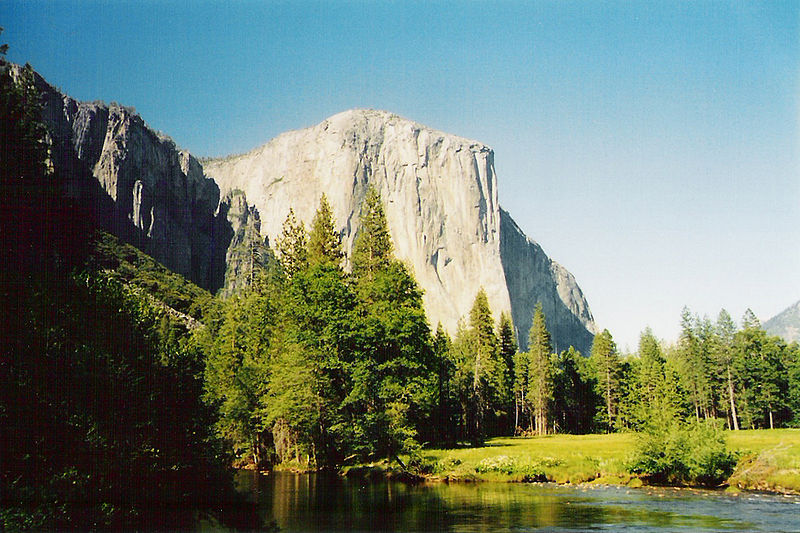
El Capitan, Yosemite National Park, USA. Credit: Wikipedia Commons

Last November, it seemed that the United States was moving in the direction of becoming a more commons-based society: that we were learning to better value and protect our shared resources for the benefit of all.

This year, though, measures that once seemed inevitable—like health care reform, increased social spending, and tougher Wall Street regulations—are now being challenged in fierce debates.

But commons thinking did get a small boost this fall in an unlikely setting: a hit television series. The acclaimed Ken Burns PBS documentary called national parks “America’s Best Idea”—a ringing endorsement, seen by millions of viewers, of the commons as a deep-seated American ideal. National Parks stand as one of the most beloved symbols of what we share together.

Ken Burns’s “The National Parks” is not just an upbeat footnote to what feels like a disappointing political season. It is significant for showcasing Yosemite, Yellowstone and other cherished national treasures as an inheritance belonging to all citizens.

Upon first hearing of the commons, many people immediately see it as something alien to American life—an ethic better suited to tribal communities in the rain forest or the social democracies of Europe. As long as hopes for people working collaboratively to leave a better society for future generations can be dismissed as a betrayal of our national character (as tea party-goers, talk radio jocks and Congressional Republicans charge), then real economic and social change will remain an impossible dream in the U.S.

This week offers another example of how the commons is weaved into our collective imagination as a nation: Thanksgiving. I consider it another of America’s best ideas—a harvest feast celebrating the bounty of our land and indigenous food traditions, which evokes the rich communal culture of Native Americans as well as the community-centered life of New England settlers.

Furthermore, the festive Thanksgiving holiday vividly illustrates the joys of commoning—a newly minted word describing how the commons is put into practice. Commoning, which happens all around us all the time, counters the widespread assumption that privatized actions are the key to our prosperity, security and happiness.

Think of the typical Thanksgiving morning in a typical American household. A team of cooks and hangers-on bustle in the kitchen: slicing, dicing, spicing, baking, broasting, whipping, tasting, and talking. Every guest coming through the door contributes something more to the meal—their special cranberry or sweet potato dish, vegetables out of the garden, a jug of home-brewed beer, dinner rolls from their favorite bakery, chrysanthemums for the table, or a bottle of wine saved for this special occasion. Oftentimes, at least in my experience, the neighbors are called to bring over a couple more chairs so that everyone can sit at the table while the turkey is carved.

Even more important than the food is the conversation, covering everything from family updates and college football to community issues, personal aspirations and the season’s new movies.

This year, as last November's triumphant message of “Yes, we can” bumps up against an angry chorus of “No,” the commons would be a timely subject to bring up over pumpkin pie. Or even during the blessing, when we count all the things we are thankful about.

Your rating: None Average: 5 (1 vote)

Comments

Agreed all around, and thanks for this essay, but what do we do about that roughly 50% of the country that sees any form of civic-mindedness as "a betrayal of national character" or as certain of my relatives will shriek, "Communism!"? Are we willing to actually talk to and engage those folks, or are we just going to go on calling them dumb, crazy, and dangerous? Are we going to just ignore them and do our thing in the cities and college towns, and is *that* really commoning? Can we respect the opposition's basic value system while getting them to back off the more hostile, anti-intellectual tenets of their agenda? Seems like the challenge is not to convince Shareable fans of the value of national parks, but to convince the other half of the country that Yellowstone is not a Marxist plot.

Jen, I count friends and family on both extremes of the political spectrum. Even if I disagree with how someone I know sees things, I can't label or dismiss them because I know and love them. I have to deal.

When I do engage in political discussion in mixed political company, which frankly isn't often, it's almost always a challenge. I often don't know how to have a discussion on an issue while maintaining my integrity and my relationshsip. Sometimes we find agreement, but far more often we disagree and leave it at that. I've found that tolerance of difference can be pretty satisfying in itself. From these experiences, I have great faith that divides can be bridged by either finding common ground or mutual tolerance.

I also believe that a new synthesis of various strands of political thinking may be forming that's more aligned with reality and inclusive. I think Obama's unifying rhetoric points the way. In any case, the crises we face calls for questioning old formulations and looking for new ways of describing reality, planning, and doing things.

As publisher of Shareable, I should also point out that Shareable is for folks of all political stripes...and races, religions, sexual orientations, etc. There's a
good many people on our Facebook page that are Christian and conservative. I invited many of them as I invited my friends who are Jewish, Muslim, gay, straight, liberal, etc. Everyone belongs because sharing belongs to everyone. It's human. It's universal. Call me naive, but this is exactly why I believe the simple idea of sharing can bring us together.

And to answer your question, What do we do with people we don't agree with? There's lots of good information on this topic, but let me suggest the below:

-In context of this site, invite them to Shareable. And have lively and respectful discussions.

In general:

-Have a real discussion with them. Do whatever it takes to make that happen.

-Hang out with them. Confronting difference is a chance to learn and exercise empathy. I've read that having a diverse social network is good for your health.

-Lastly, and most importantly, share with them. There may be no better way to bridge a divide.

This being said, none of the above is easy. Despite the best of intentions, I have mostly failed at the above. The occassional successes, however, have been life changing. That's why it's worth trying.

I wrote this blog, in part, as an attempt to think about how to reach people for whom ideas like the commons and sharing would immediately raise hackles. Nearly everyone agrees that the idea of national parks is a good, and the same with Thanksgiving-- and both of them underscore a theme of we and not me.

I believe that claiming some American traditions as part of a communal, not individualistic, ethos is a start.

Jay, well put. Shareable serves a similar purpose as your post - to tell an inspiring true story about what we're able to accomplish when we share. This is a story rarely told in the mainstream media, so I really appreciate you contributing this post to Shareable. Or rather I give thanks for it ;)

Neal

Jay and Neal, apologies for this late reply some seven months later -- an email glitch kept me from being notified of your responses.

Thanks for this thoughtful and much-needed exchange. Jay, I appreciate your efforts to bridge the divide by evoking a resource like the national parks that hopefully most of us do agree is a good thing and part of our national identity.

I've had some of the most profound experiences of my life in national parks, including 9/11, which happened when I was on a solo trip in Yellowstone. I remembered having been there as a very little kid, and as I heard radio reports of the chaos that was happening in New York, it was somehow comforting and grounding to be amidst the same calm and beauty I loved as a child. I almost felt as though I was home.

Neal, good to know that someone else has the struggles I have to find common ground with friends and family. I talked to Jeremy Adam Smith at SF Zen Center the other night and recommended a great book by Dick Meyer called "Why We Hate Us," which dissects why our capability for dialogue has broken down. The book explains the situation better than I can.

Learning to exchange with people and listen when so few of us are ever taught how, and when those things are so mocked and devalued by our culture, is basically like learning to crawl. You've got to do it, or you'll be trapped the rest of your life, and yet it can feel like spinning your wheels, or maybe just making a jackass of yourself. But I believe it's worthwhile, which is why I appreciate Shareable so much, and tell all my friends about it.

Add comment

The content of this field is kept private and will not be shown publicly.
Mollom CAPTCHA (play audio CAPTCHA)
Type the characters you see in the picture above; if you can't read them, submit the form and a new image will be generated. Not case sensitive.

Jay Walljasper originally wrote this article for YES! Magazine, a national, nonprofit media organization that fuses powerful ideas with practical actions.

#shareable on twitter

Recent comments