
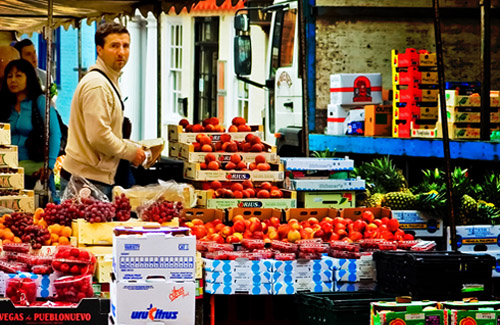
Fast Company recently selected "The 8 Biggest Kitchen Innovations of the Last Decade." While a number were—predictably—devices, 2 of the 8 selections were Web-based solutions (the epicurious iPhone app and freshdirect.com).
Food is integral to the way we live, with far-reaching effects on the environment, personal health and enjoyment. In this spirit, Shareable and Latitude are co-launching a study to understand how new connectivity—improved accessibility, transparency, organization, and socialization of information—alters our desires and decisions around food and food-purchasing. The study (whose lead analyst is Marina Miloslavsky) will remain open for participation for 1-2 weeks, and results will be posted to Shareable and life-connected.com by mid-March.
To take the brief survey, click here. When the study reaches just 50 participants, Latitude will donate $500 to The Hunger Project, a global non-profit committed to the sustainable end of world hunger.
This year, we’ve seen Mutual Aid in Motion.
From scaling sharing hubs to Mutual Aid 101 trainings, we’re helping communities build the tools they need.
Every dollar fuels lasting resilience – proving that when we move together, we all move forward.

Using computers, including hand-helds and smartphones, we can make our preferences better known to the people who bring us the food we buy and eat: farmers, processors, distributors and retailers. We can demand and eventually get precisely the kind of food we want. Essentially, the power to change the way we shop for food, the way it gets delivered to us and ultimately the way it gets produced. — New York Times, “The Way We Live Now: Faster Slow Food”
So what might “information innovations” for the future of food shopping look like? Search-filtering by personal preferences like health, price, and food origins? Digital grocery lists with “smart memory,” recommendation capabilities, and compatibility with online grocery stores—or seamlessly integrated information-sharing and social purchase-tracking?
(Food for thought: up-and-coming blippy.com socializes real-time purchasing, asking “What are people buying right now?” and Ikan is a home bar-code scanner that digitizes your store list as you throw items away, then provides home delivery for items on the list—”the Netflix of groceries.”)
Food, Connected: About the Study
Personal narratives are the chosen “input” for this study (textual, audio, or video formats). Implicitly or explicitly, structured storytelling can indicate gaps in the food-information experience that we may not have even acknowledged previously, but which have a significant impact on the way we live. They can also suggest latent or future solutions that could fill these gaps to better improve an individual’s experience, with potentially far-reaching, positive effects.
We'd love for you to help us pinpoint opportunities for information improvement around food—and take part in generating solutions for the future.
Tell us about a specific instance during a grocery-shopping trip where you wished you had more information of some sort. This can be any type of information – food origin, health, price, location in the store, or anything else that was frustrating during your experience.
Participate here.
(Read the study's privacy policy here.)
Check back at Shareable to read up on the study results in the coming weeks!
